
Darena Health Blog and News

HTI-1 Compliance: Certification is just the beginning
HTI-1 compliance doesn't end with certification. Learn how EHRs can maintain FHIR APIs, EHI Export, Decision Support Interventions, Real World Testing, and other ONC-certified capabilities to reduce compliance risk and support reliable interoperability.

HTI-1 Compliance Checklist for EHRs and Health IT Teams
HTI-1 compliance involves much more than implementing a FHIR API. This practical checklist helps EHRs and health IT teams evaluate certification, operations, SMART on FHIR, USCDI, EHI Export, Real World Testing, and whether to build internally or integrate with a certified partner.
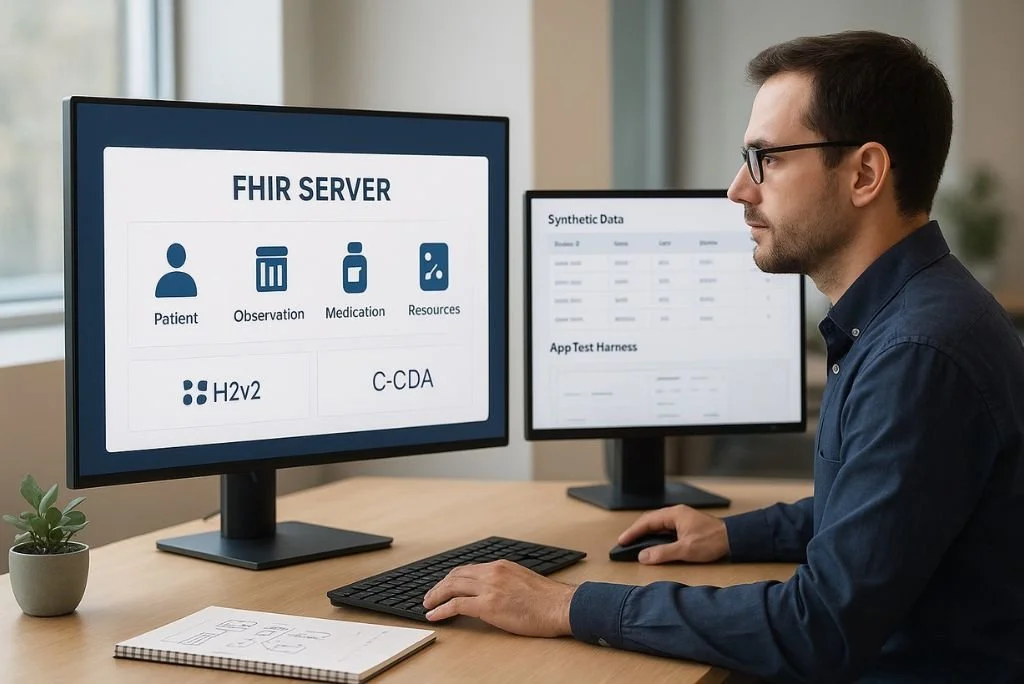
Why Healthcare Needs More than FHIR
This post explains why FHIR is the necessary foundation for interoperability but not the complete solution. FHIR standardizes core resources, yet real world needs such as trial data, consent workflows, bulk exports, and legacy formats often require extensions and operational workspaces. Learn how FHIR-native workspaces bridge the gap with sample data, AI-ready features, and certified modules for HTI-1 and MIPS.

CHPL Bi-Annual Attestation: Wash, Rinse, Repeat
As we roll into another season of attestations, it's time to check key certification maintenance requirements to keep your EHR compliant. CHPL Bi-annual attestations are coming up shortly - starting Apr 1, 2025. Are you ready?

ONC (g)(10) FHIR API Conformance Update: App Registration
The ONC recently shared updates clarifying the app registration requirements for health IT developers certified to § 170.315(g)(10). Read on to find out what must the Certified API developers do to conform to these updates.

A Quick Information Blocking Primer
The Information Blocking Rule ensures efficient sharing of electronic health information (EHI), prohibiting unnecessary restrictions unless legally justified. Compliance is critical for healthcare providers, EHRs, and HIE networks to avoid penalties. Learn simple steps to avoid information blocking.

Information Blocking – A Million Reasons to be Compliant
Staying compliant with information blocking regulations is essential, not only to avoid penalties but to protect patient trust. With the ONC's rules tightening and hefty fines at stake, it's more critical than ever for EHRs and healthcare providers to understand and adhere to these guidelines, ensuring transparency, data-accessibility, and data-sharing that empowers patients.

Information Blocking – The Compliance Ghosts You Don’t Want to Haunt You
ONC warns healthcare providers and developers to keep data access open as directed in HTI-1 and the Cures Act. Hidden information blocking could result in a bone-chilling visit from regulators this Halloween.

Alert: ASTP/ONC Warns of Information Blocking and Calls for Action
This week, Micky Tripathy, the ASTP/ONC Acting Chief AI Officer, published a blog post addressing significant gaps in the implementation of the 21st Century Cures Act and brought the focus back to FHIR APIs. This blog captures the 5 key points he made to warn and to enforce the mandates. Join the conversation.

Failed Cures Act Implementation? Let MeldRx™ Rescue You.
January 1, 2023, is not just the beginning of a new year, it is also the beginning of the enforcement period for the Information Blocking portion of the Cures Act. The EHRs must provide FHIR APIs for all their users, and Providers must ensure that their FHIR API endpoints are publicly available.

Cures Act MYTHBUSTERS
The misinformation floating around combined with an incomplete understanding of the (g)(10) FHIR API and other Cures Act requirements can be detrimental to the EHR developers and the providers. In this blog, we bust these myths, shatter misconceptions, and guide you to ask the right questions.

Have (g)(10) FHIR API Burning Questions?
EHRs are feeling the heat of Cures Act requirements as the deadlines draw closer. Read on to find answers to burning questions that EHR developers and providers are faced with as they are trying to understand the implementation details of the (g)(10) FHIR API and its implications.

2021: Time for Everyone to Play With FHIR®
As 2020 comes to a close, it is time to reflect back at the year. The COVID challenge we are faced with and drawing upon the lessons learned from it to remind everyone that regardless of the role you play in the healthcare ecosystem (patients, providers, payers, and Health IT vendors), come 2021, you need to start playing with FHIR.

Am I an Information Blocker: A $1,000,000 Question
On October 29th, 2020, ONC announced an Interim Final Rule to extend compliance for some of the provisions including Information Blocking due to the COVID-19 pandemic. In this blog, we discuss what changed in the Interim Final Rule, how it impacts providers and EHR vendors, and solutions for meeting the Information Blocking requirements.

BlueButtonPRO™ - First Certified Solution for Cures Act Announces Integration with Microsoft Azure API for FHIR
Darena Solutions announced a new integration between their BlueButtonPRO™ solution and Microsoft® Azure API for FHIR. BlueButtonPRO is an end-to-end FHIR-based patient engagement platform to connect providers, payers, research organizations, registries and patients.

First Certified FHIR Solution for Cures Act - BlueButtonPRO™
BlueButtonPRO™ by Darena Solutions becomes the nation’s first ONC certified solution for meeting 21st Century Cures Act requirements for EHR Vendors and Payers. BlueButtonPRO™ can be integrated with any EHR to meet the Cures Act requirements mandated by ONC for all EHR Vendors. It also meets and exceeds the CMS Interoperability and Patient Access final rule requirements for payers.

Get Ready for Cures Act With Azure API For FHIR®
There is a lot of confusion on what exactly the 21st Century Cures Act requires and includes. We help break down the law and demonstrate how we are helping our clients meet the requirements using Azure API for FHIR®.

FHIR®: What’s in it for Providers?
There is a lot of buzz surrounding the concept of interoperability and FHIR®, but what do healthcare providers get out of it? We delve into a variety of benefits that providers organizations (big and small) can expect to see when they decide to adopt FHIR®.

Connecting Patients With FHIR® Based Clinical Data Registry
Read how to implement a clinical registry solution based on Microsoft Azure API for FHIR that accepts data directly from patients in a very secure yet simple way. Before a patient can share data, they need to have access to the data themselves and be able to control it. Find out how we address this issue.

FHIR® Power: A Clinical Registry with Azure API for FHIR® & Microsoft Power BI
Read how Microsoft Azure API for FHIR can be used in conjunction with Microsoft Power BI to meet scientific, clinical, and health policy, and MIPS reporting requirements for a professional association’s clinical registry.